- Screen Colours:
- Normal
- Black & Yellow
WALBERSWICK
Is a beautiful, unspoilt village situated at the 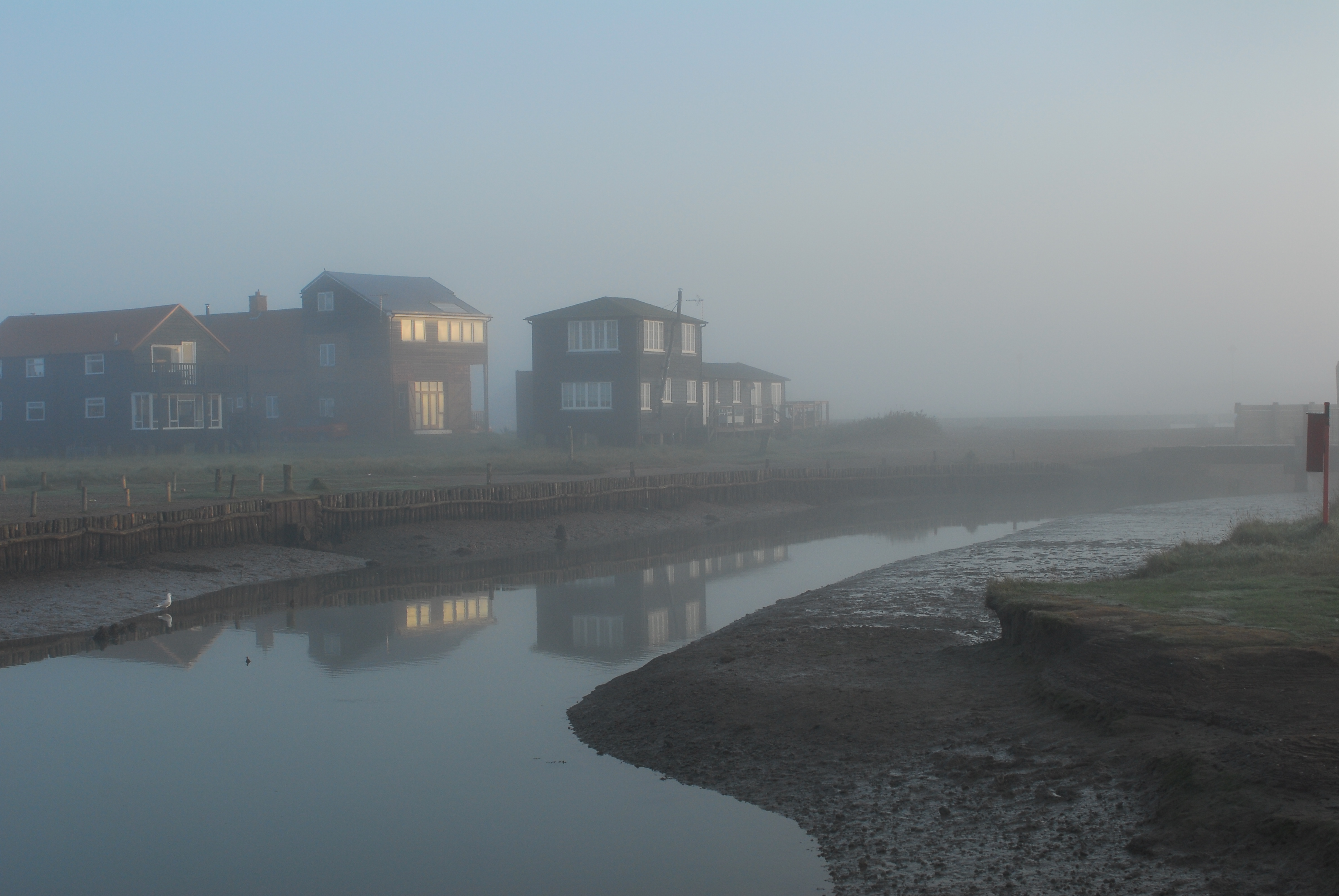 mouth of the River Blyth. There are no amusement arcades or candy floss to be found, but families seeking pleasure in the peace and quiet of the beach, river, marshes and heathland will find it here.
Perhaps one of the most iconic views of Walberswick is that of its fishermen’s huts and houses on stilts. They were once far more numerous, but the great storm of 1953 washed many away and the picturesque Tea Rooms was last seen floating merrily away down the river.
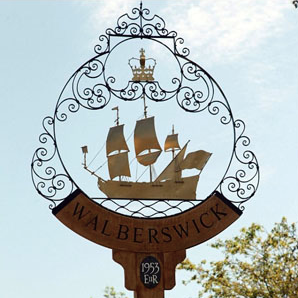 THE VILLAGE SIGN
Clifford Russell, an architect and artist living in the village, designed the sign to commemorate the Coronation of Queen Elizabeth in 1953.
The ship in the design was copied from a contemporary picture of a 17th century man-of-war representing Walberswick’s ship building past.
The sign, which stood at the entrance to the village was stolen in 1984. Its replacement was copied from a photograph and is two-thirds the size of the original and stands on the Green. However, the original sign was recovered in 2012. It has been restored and erected opposite the church. Appropriately, it was unveiled during the Queen’s Diamond Jubilee celebrations.
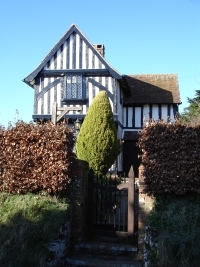 ARCHITECTURE
Hidden away among the village's genuinely old buildings, are some little known gems from the early 20th century. Frank Jennings may be better known for his father, Tom, who was a famous Newmarket trainer, or for his equally famous son, Humphrey, who made classic documentary films during the 1940s, yet Frank was an Arts and Crafts architect of the highest calibre. Luckily for us, he built a dozen or so houses in Walberswick (one of which was bombed in the Second World War). Frank Jennings was not only a fine architect but he determined to salvage Suffolk's heritage from the demolition that was much in vogue at the time. Thus, Walberswick boasts two beautiful Jacobean staircases, some unique stained glass, medieval ironwork and carved beams, as well as an entire house bought for £80 and literally carted here from Lavenham. A DVD has been made about his work entitled "Frank Jennings, Architect and Magpie" which is available to purchase.
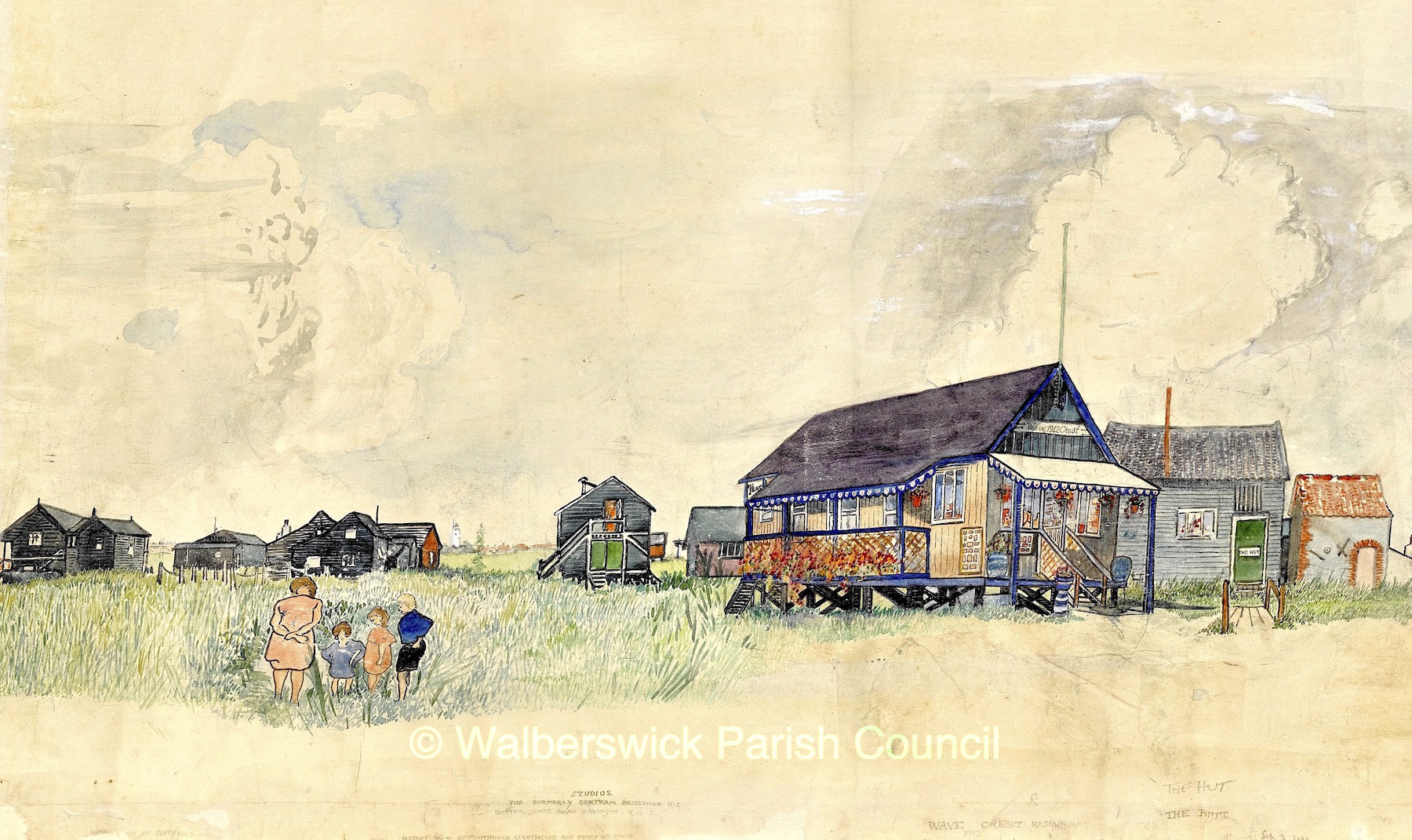 THE SCROLL
Between 1931 and 1932, J. Doman Turner, a local artist, decided to paint a picture of every house in the village. Starting as you enter the village, he worked his way along one side, round the Village Green, down to the ferry and back up the other side. The scroll is over 123 feet long and is an incredible record of the village as it was at the time. He paid particular attention to notices: a tortoise is lost and the list of prices for different uses of the then steam ferry, is long and intriguing. We have a last peep at the station, Manor Farm, and the Walberswick Pottery, together with glimpses of contemporary village characters. Further information about The Scroll
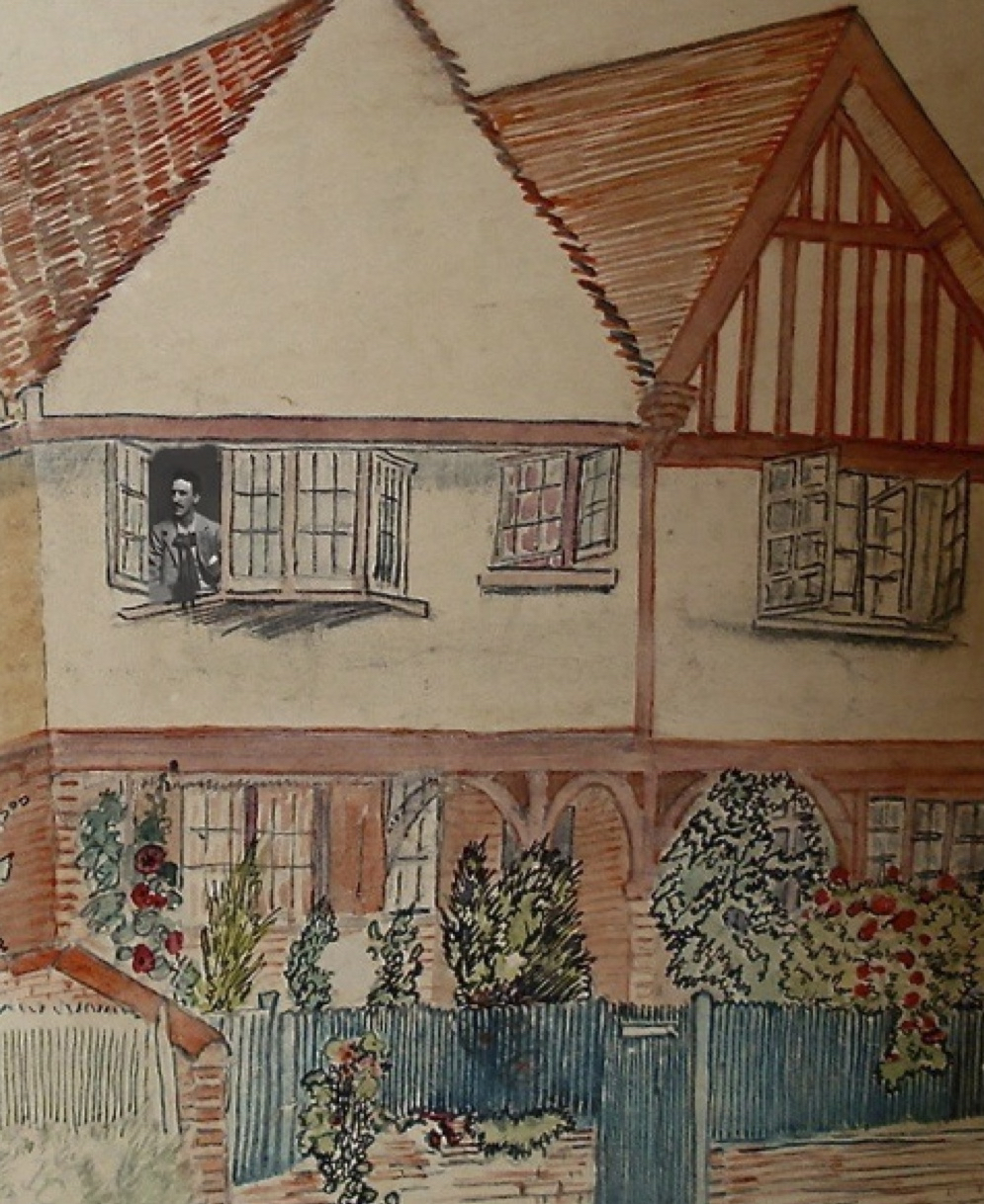 CHARLES RENNIE MACKINTOSH
A Productive but Troubled Year in Walberswick (1914-1915)
Just over a hundred years ago the Scottish architect, artist and designer Charles Rennie Mackintosh arrived in Walberswick for a summer retreat to re-charge his batteries. His career and health had sunk to a low ebb, and his loyal friend and mentor Francis Newbury - Head of Glasgow School of Art - suggested that he and his wife, Margaret Macdonald Mackintosh, might benefit from a creative break in Walberswick.
For many years Newbury had spent summer holidays at Rooftree, a semi- detached villa in the main street, as well as renting a converted riverside net shed for use as a studio. The adjoining half of the villa, Millside, was a lodging house at which Newbery was able to arrange accommodation for his friends as well as studio space for them, near his own, beside the river. Just after the Mackintoshes arrived for their summer break war broke out, and a decision was made to stay in Walberswick for a full year. Mackintosh was no stranger to the area, having spent shorter periods of time in Norfolk and Suffolk in 1897 and 1905. Surviving drawings from the 1897 visit include detailed studies of Blythburgh church.
Early Life - Brief Details
He was born in Glasgow, the fourth of eleven children, on June 7, 1868. His father William McIntosh, a policeman, changed the family name to Mackintosh in 1892, it appears that Charles made the change at this time. From 1889 until 1913 he worked on a number of prestigious architectural projects with Honeyman and Keppie; the last of these before leaving the practice was Glasgow School of Art, built between 1896 and 1909 and now regarded as his masterpiece. In 1913 he made an ill-fated attempt to set up his own free-lance practice, and fell into the grip of depressive illness mentioned earlier.
Topographical Drawings in Walberswick
Soon after his arrival in Walberswick Mackintosh's condition began to improve. He set to work on some detailed topographical drawings and watercolours, mainly near the river. He also made a careful study of Bell Cottage, almost unchanged now, after over 100 years. These drawings are all dated 1914 and were likely dated from the early part of his stay; tight restrictions were soon introduced concerning access to militarily sensitive areas, and artists working en plein air were regarded with great suspicion.
The Flower Drawings
Between 1901 and the mid-1920s 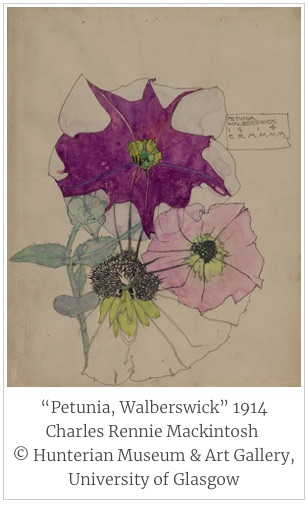 Mackintosh produced a substantial number of elegant flower studies, drawn from cut specimens. We now all know them from prints, cards and calendars. It is generally acknowledged that those he made in Walberswick were the best. Probably because they were intended to be published in Germany in book form which, sadly, the war put a stop to. The delicacy and tension of the lines and the subtlety of the colour impart a magical quality to these drawings. Mackintosh incorporated a neat cartouche below or beside each work, containing details of location, subject, the date, the artist's initials and those of his wife Margaret (M.M.M) when she was with him. In the Holy Island flower drawings of 1901 there are also the initials of friends present at the time, such as Herbert McNair and Frances Macdonald. This weakens the argument that MMM is incorporated because it was she who did the water- colouring on CRM's drawing.
A Sad Conclusion
By the end of 1914 trouble was brewing for Macintosh. His earlier connections with the Viennese Secession and close friendship with Hermann Muthesius were no secret, and his inclination to go for evening walks with a forbidden lantern led to rumours that he was a spy, signalling to foes at sea. He was arrested after just under a year in the village ‘on suspicion' and held in what was effectively house arrest at Westwood Cottage, where the painter Arthur Rendall had a studio. Philip Alexander of Millfield Road negotiated his release, but not before he had been banished from the three East Anglian counties for the duration of the war - a devastating end to an inspired and productive period and one of which Walberswick cannot be proud.